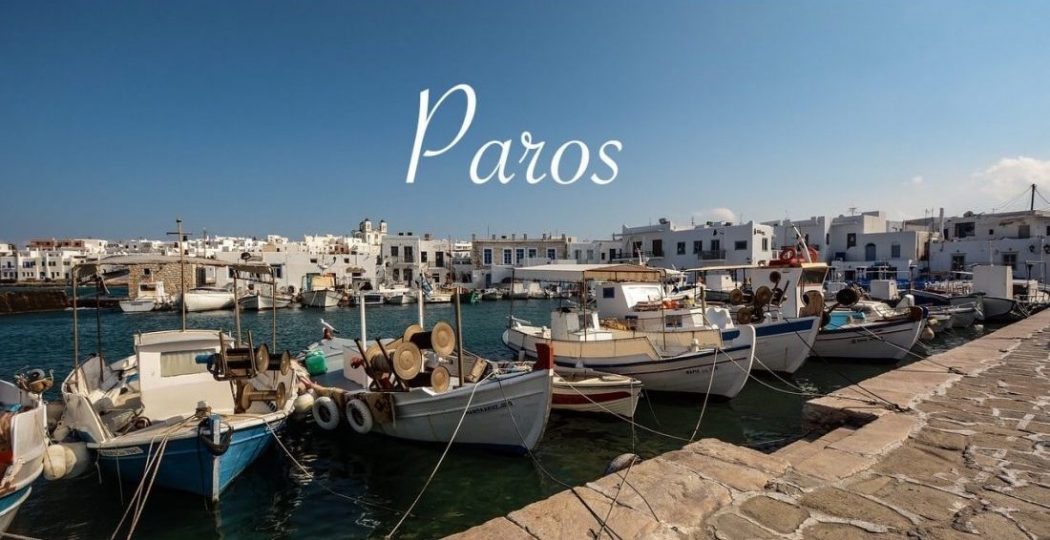
Paros Greece complete travel guide
Paros, along with its much larger neighbour Naxos, forms the hub of the central group of Greek islands known as the Cyclades
They are the epitome of the Greek islands, with scenic mountains, rich fertile valleys, white sugar cube houses and long sandy beaches.
The lack of a large airport means that Paros largely caters for the more independent tourist and, with its good ferry connections, the island is a favourite of campers and backpackers.
The capital port of Parikia, lies in a huge bay with many treasures to be found around the old Venetian Kastro, several splendid churches and a signature picturesque windmill on the long waterfront.
The island has many good beaches and the clean sands are clear of the ugly flotsam that often adorns many Greek island beaches.
The much photographed port at Naoussa is one of the most picturesque in the Cyclades with sugar cube houses dotted around harbour and several pleasant beaches lining the large bay
Paros will suit those looking for a quiet destination with a good tourist infrastructure. Its central Cycladic location and good ferry connections make this an ideal base for Greek island hopping.
Where is Paros?
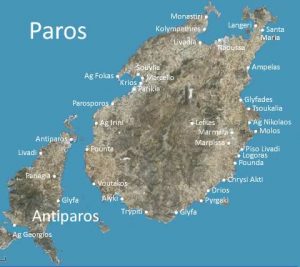 Paros lies in the centre of the Cyclades group between Crete, in the south, and the Greek mainland, to the north.
With no international airport, arriving by air is usually on a domestic flight from Athens. Otherwise it’s a ferry from Athens or one of the other islands that have large airports such as Mykonos and Santorini.
Paros lies at the heart of the Cyclades and at the hub of the Greek ferry network with many boat connections to other islands.
The roads are good and there are plenty of hill trails for walking. A bus network links the larger villages and most of the beach resorts.
The offshore island of Antiparos has regular daily ferry links and offers even more remote hill trails for those visitors who enjoy walking.
Paros has a good range of accommodation, from luxury hotels to self-catering studios and apartments, and there are several large camping sites.
History
Paros has been inhabited since the 4th millennium BC. and experienced periods of great economic and artistic prosperity, but also periods of plunder, intense violence, decline and obscurity.
We have the first traces of life in Paros on the island of Saliagos, between Paros and Antiparos, where one of the oldest settlements of the prehistoric Aegean appears.
It owes its name to the leader of the Arcadians, Paros, who took refuge on the island around 1100 BC, when the Dorians attacked Arcadia.
Remains of an Early Cycladic settlement were found on the hill of the Castle of Parikia, while other remarkable settlements of this period have been found in Drios, Koukounaries, Glyfa, Faragga etc. Paros is one of the few islands in the Aegean, where the Minoan civilization developed.
Besides, it seems that the founder of the ancient city of Paros was Alkaios of Cretan origin and the first inhabitants were settlers from Crete. That is why the city, in place of today’s Parikia, was named Minos, in honor of the king of the Minoan state. This city was one of the most important ports of the Minoan civilization and as archeological findings show it flourished in 3,000 BC.
Parikia the capital of Paros
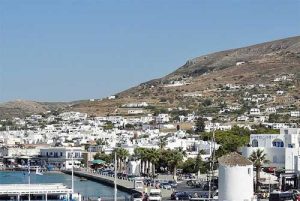
Parikia, sometimes spelt Paroikia, is the busy Paros island capital of some 2,000 people. Cafes, tavernas and shops concertina in all directions away from the central harbour windmill, a popular meeting place and the waterside focal point.
The port handles around 30 ferries a day in high summer when it can appear to be bursting to the seams.
To the east is the main coast road which bottlenecks at the small, scruffy beach of Livadia, shaded by tamarisk trees and a clutch of tavernas before fragmenting into a warren of one-way streets.
To the west a a line of restaurants stand behind a sea wall that peters out at a small shingle beach and a few old windmills lost among the flourishing cafes.
The atmosphere changes away from the waterfront. Signs to the Traditional Settlement reveal a wide paved square and small triangular park fronting the remarkable cathedral of Ekatontachoni.
Behind that is the Archaeological Museum, then a labyrinth of alleys jammed with shops, galleries, cafes and houses, but strangely only a single supermarket.
At the heart of Parikia are the walls of the Venetian Castle, marked by terraces of stone draped with foliage and flowers and a 13th century Venetian castle surrounded by picturesque churches stuffed with treasures.
What to see in Paros
The Church of Panagia Ekatontapiliani
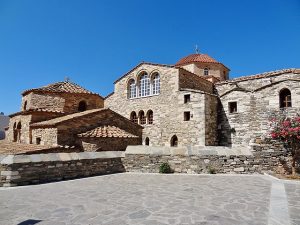 The Church of Panagia Ekatontapiliani or Katapoliani is one of the oldest, best preserved and most important churches in Greece and is constructed on the ruins of an ancient temple, it is one of the earliest Christian churches in Greece and is found in Parikia’s park.
According to tradition it was built by St Helen around 300 AD and its baptistery belongs to the original building. It has an interesting Byzantine Museum which is situated in a peaceful courtyard garden. The little wooded copse of pine trees behind the church is also interesting as you can easily see the force of the Cycladic winter winds with all the trees bending at the same acute angle. is worth strolling around in. There is also an interesting museum with various findings from different periods in Paros history.
Butterfly Valley of Paros
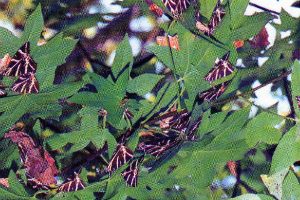 Like Rhodes, Paros has its own Butterfly Valley, clearly marked off the roads on the western side of the island to Pounta and Alyki. The luxuriant, leafy valley set in the hillside at Petaloudes is temporary home to the Jersey Tiger moth Euplagia quadripunctaria in July and August.
Difficult to see except when in flight, the brown moths are well camouflaged. When airborne they display their deep red overwings, but the practice of disturbing them is firmly discouraged as it can reduce their sexual activity and result in fewer moths for future generations.
The valley is actually a private garden, but tourists are made warmly welcome by a small cafe with a fountain and well marked paths through the undergrowth. The dappled shade and running water can make for a pleasant break from the scorching summer heat.
Parikia Castle
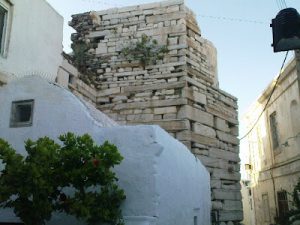 The area around the ruins of the Frankish castle is suitable for a picturesque walk in the labyrinthine alleys with the mansions and the masonry made of ancient fragments.
The Frankish or Venetian castle built immediately after the fall of Constantinople in 1207 made mainly of columns and architectural materials from the temple of the goddess Athena (6th century BC) patron saint of the ancient city of Paros.
The founder was Markos Sanoudos who together with other Crusaders of mainly Venetian origin occupied Paros.
Asclepieion
Perched on a hill on the ring road of Parikia, the ruins of the ancient temple dedicated to Asclepius are definitely worth a walk. Delio Ruins of the temple of Delios Apollo, columns and architectural members, in a location with a nice view near Parikia.
Archaeological Museum
Sculptures of archaic and classical times and findings of small crafts from the Neolithic to the Roman era. The marble statue of Gorgos stands out, 1.35 m high, which is almost intact. The Archaeological Museum, behind the Ekatontapyliani, has some fascinating exhibits including a fragment of the priceless 4th century marble engraved Parian Chronicle which records the major cultural and artistic achievements of ancient Greece from around 1500 BC to 260 BC.
Ancient cemetery
Near the port, almost on the coastal road, it was used from the end of the 8th BC. century until the 3rd AD and includes a polyandry (mass grave) unique to the Aegean (8th century BC).
Ancient Marble Quarries
On the road from Parikia to Lefkes. From here came the famous Parian marble from classical times to the 19th century. The famous marble quarries at Marathi which have produced the raw material for some of the finest sculptures of ancient Greece including the famous Hermes of Praxiteles, now displayed in the museum of Ancient Olympia, and the Venus de Milo whose current home is the Louvre Museum in Paris (much to the vexation of the Greeks). The last slabs to be mined here in the 19th century were used for the tomb of Napoleon Bonaparte.
Three churches
Complex of three 17th century churches built on the ruins of a Byzantine temple from the marbles of ancient temples. Monasteries For lovers of religious tourism, it is worth visiting the Logovarda Monastery, with 17th-century frescoes, the Monastery of Agios Antonios, which was once surrounded by a Venetian castle, and the Monastery of Agios Anargyros, with a beautiful view and a beautiful 18th-century marble fountain.
Dilio
At Dilio are the remains of the ancient temple to Apollo, and about 11km outside Parikia is the famous Asclepio, the temple to the god of medicine Asclepios where the ancient Greeks sought remedies for various illnesses.
Towns and Villages of Paros
Naoussa
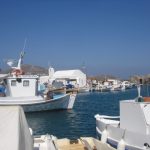 Naoussa is a picturesque town on the north side of the island. Here there exists the ruins of a a Venetian citadel from the 15th century .
Around the port and promenade you will find many taverns, restaurants and cafes.
If you are on Paros on the 23rd of August don’t miss when the people of Naoussa celebrate the victory over the Turkish pirate Barbarossa by reacting the events: 100 boats imitate the battle and the celebrating goes on until the morning after.
Marpissa
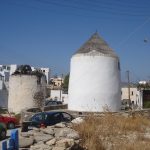 A little picturesque mountain village around 16km from Parikia. The village itself is charming and full of historical interest, with traditional Cycladic houses and narrow paved roads.
It boasts many churches that date from around the 16th and 17th century as well as the ruins of a Venetian Castle.
There are some typical Cycladic windmills and a folk museum sited in St. Nicholas square at the centre of the village. .
Piso Livadi
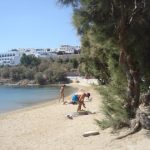 About 8km south of Naussa is the wonderful resort of Piso Livadi, with a small harbour frm where you can visit the neighbouring island of Naxos.
Here you will find cafes, fish tavernas and restaurants as well as accommodation in beautiful lodgings that are built around the port.
There is a small sandy beach with tamarisk trees and not far away is the larger beach of Logaras.
Drios
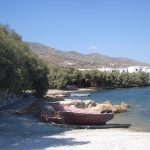 About 23km from Parikia and 1 km from Chrisi Akti is the village and beach of Drios.
The main road to Drios beach is small and winding util you reach a free car park where you can leave your vehicle and walk the short distanct to the beach.
The paved lane leading down to the seafront is very well kept, bordered on both sides by Oleander trees with a good selection of studios and apartments to rent.
What to Do
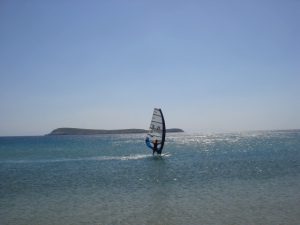 There are various water sports around the island and you can also go scuba diving, which is quite unusual in Greece. You can also go biking or jogging quite easily since the island is basically flat.
Among other things that have made Paros so popular is that the island is ideal for windsurfing and every summer Paros hosts windsurfing competitions.
There are many sporting facilities on the island, most of them located in the larger hotels. The island also has diving and snorkelling schools and there are many places where you can enjoy these activities, either as part of a group or independently. Fishing is another activity that many enjoy and the island boasts plenty of places to do this.
You’ll find plenty to see and do if you’re staying in the lively port of Parikia where the ferries dock and the majority of holiday accommodation on Paros is centred. But take the time to venture further afield because the island offers a wealth of places of interest to explore including its famous marble quarries, the extraordinary Valley of the Butterflies, some ancient monasteries and pretty villages.
Pirakia’s Archaeological Museum, behind the Ekatontapyliani, has some fascinating exhibits including a fragment of the priceless 4th century marble engraved Parian Chronicle which records the major cultural and artistic achievements of ancient Greece from around 1500 BC to 260 BC.
Visit the island’s ancient capital Lefkes, 12 kilometres south east of Parikia, is the highest and prettiest village on Paros with a magnificent cathedral, a folk museum, medieval houses and labyrinthine alleyways.
Take an excursion boat over to the island of Antiparos (a 10-minute hop to the west of Paros) to visit the stunning stalactite cave which has attracted many illustrious visitors including English poet and lover of all things Greek, Lord Byron.
Paros beaches
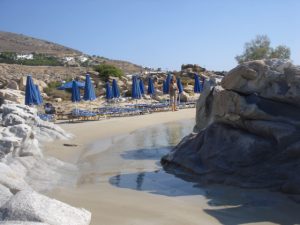 Paros has many beaches and it is difficult to say which are the best. For families, the Kolymbithres beach is considered ideal .This is an amazing location with fine sand and a rock formation which resembles a lunar landscape, unique and enchanting. Especially out of high season when it is deserted.
Close to Nausa on the north coast are the beaches with the quaint names of ‘large and little piperi’. Also there is the beach of Lymnes, the beaches of Santa Maria, Xifari, Lageri and, a little further to the south is the beautiful beach of Ampelas.
At the Golden Beach the sea can get quite rough, but the winds attract windsurfers from all over. Chrisi Akti in Greek or the Golden Beach is possibly the most popular beach on Paros due to its glorious fine golden sand.
It is a wide beach, dotted with sand dunes, culminating in the crystal clear turquoise sea of the Agean. It is well organised with umbrellas, several taverns cafes and bars that organise beach golden beachparties. There is a large area of free parking. You will also find a good selection of rooms and studios to rent near by.
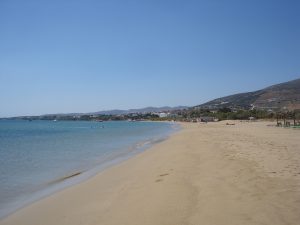 The Golden Beach is popular with wind surfers and the beach has excellent sporting facilities for this and a well known wind-surfing competition is held here every August with competitors arriving from all over Europe.
The region of Chrisi Akti is very fertile with many fields of tall rushes. The road from here to Drios is very fertile and verdant. There are Cypress and Palm trees, olive groves, vine yards and orchards all along the route.
Piso Livadi on the east coast has golden sands with very good tourist facilities and also some good hotels and other forms of accommodation. A few minutes walk from Piso Livadi is the beach of Logaras well organised and sandy.
In 1st of August 2023 the people of Paros started the Paros Beach Movement in order to liberate the island’s beaches from the umbrellas and beach beds that several businesses populated the beaches of Paros.
Paros nightlife
Just like anywhere else in Greece, you will find little bars and taverns even in the smallest village on Paros. If you really want to party, it’s best to stay in Parikia – that’s where the clubs and discos are. There are also many places with live Greek music.
Naoussa as well has a lively nightlife. There are also summer cinemas in Parikia where you can see English films with Greek subtitles.
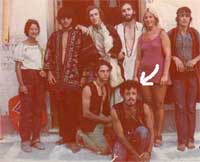
During those good old days the spot of the nightlife in Parikia was the Discotheque Fishermen where I worked as a DJ for some years.
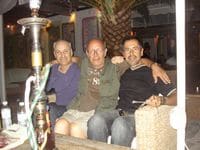
Today Gianakos owns with his brother George the spot of the nightlife in Parikia, the music bar Saloon d’Or, right on the seafront towards Agia Anna and a bit further under the hill the famous Dubliner dancing club with a complex of bars and clubs that during the high season can accommodate more than 3000 people !!!! with all kinds of music and many happenings.
Eating out in Paros
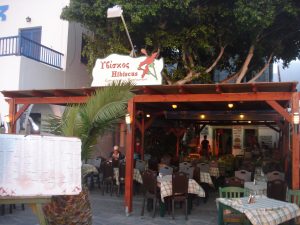 Paros restaurants are very varied, and you can get traditional Greek food or more international meals. In Parikia you will find most of the restaurants and taverns at the right side of the port towards Argo beach and further to Krios.
There are also many eateries, ice cream parlours and fast food places around the Mando square and inside the old town. To the left of the port the long promenade is bursting from cafeterias, pizzerias, music bars and snack bars.
Here you will find the oldest restaurant of Paros the Hibiscus as well as one of the oldest cafes of Parikia the Stelakis cafe that today you can eat the best Galaktobouriko. For the largest portions of food ever seen in a Greek restaurant try the Balkoni in Alyki !!!!!
Shopping
Most shops are in Parikia, and here you can get everything from cheap souvenirs to antiques and jewellery. Marble from the island in various shapes, local wine & embroideries are nice present for yourself or friends.
At the Mando Square under the police headquarters located the shop of the farmers association of Paros here you will find local products like honey, wine and other original bio products, there are also many supermarkets, bakeries and green grosser shops. The same kind of shopping you will find as well in Naoussa and Marpisa.
Getting around
There are fairly good roads on Paros connecting all the major villages on the island. You can rent a car or a bike, take taxis or use the local buses. The road infrastructure is excellent and you can make the round of Paros within few hours on a bike or a car.
Getting there
By Air
Paros Panteleio Airport (PAS) is located near Alyki in the south of Paros looks likely to be abandoned in 2015 to make way for a new airport near Pounta on the west coast.
Like Alyki the new airport will still be too small to take international charter aircraft, but it will accommodate domestic flights from Athens (45 minutes) and from other Greek islands such as Crete and Rhodes, which will continue to fly to the old airport until the changeover.
Until the new airport opens, buses will run from the old terminal to Parikia and Naoussa. The transfer time to Parikia is about 10 minutes and many hotels also offer private mini bus pick-ups.
With cheap flight options opening up, the flight routes to Mykonos and Santorini, followed by a ferry to Paros are increasingly attractive options.
There are plenty of ferry connections to Naxos but timetables don’t always coincide with flight arrivals and it may require an overnight stop en-route. Hellenic Star have three flights a week from Athens.
A flight to Mykonos International Airport (JMK) is probably the cheapest bet. The airport is four kilometres from Mykonos Town where there are daily ferries to Naxos and Paros but none after 10am.
The transfer time to Mykonos port is about 10 minutes and there is now a regular bus service operating from the airport to the main port town.
Travelling via Santorini may be the quicker as ferries to Paros and Naxos are more frequent and visitors landing before 11am may be able to catch a ferry on the same day, avoiding an overnight stop.
By Ferry
Paros, like neighbouring Naxos, is a hub of the Cyclades ferry services and there are ferries connections both to the mainland and to many other islands.
Ferries leave daily from mainland Piraeus (Athens) and Rafina. Around six ferries a day departing from the mainland, the last one leaving for Paros at 5pm and the journey takes five to seven hours depending on the ferry type. Fast ferries and catamarans will do the crossing in under three hours.
Hellenic Seaways run seven crossing a week from Piraeus (3 hours) and seven a week from Heraklion on Crete. It also operates two ferries-a-day to Naxos and Mykonos and three-a-day to Ios.
Blue Star Ferries runs up to four days-a-week to Amorgos, Dounoussa, Iraklia, Naxos, Syros, Astypalea and Koufonissi with around three crossing weekly to Ios, Santorini and Naxos.
Fast ferry services are operated daily by Sea Jets to Milos, Naxos (30 minutes), Mykonos (45 minutes), Tinos (80 minutes) and Rafina (just over three hours).
NEL Lines runs services to Schinoussa, Syros, Santorini, Anafi, Katapola, Aegiali, Donoussa, Ios, Iraklia, Koufonissi, Naxos, Folengandros, Thirasia, Sikinos, Mykonos, Kimolos, Serifos, Milos, Sifnos, Kea, Kythnos and Lavrio.
Also, Aegean Speed Lines offer routes to Naxos and Piraeus.
Paros has a pleasant port at Parikia with a traditional quayside windmill to greet visitors. The main bus station and the taxi rank are on the waterfront to the left of the windmill as you disembark.
There are several daily island cruises to both the popular and the more remote beaches of Paros, especially those around the bay from Naoussa.
Ferries cross to the islet of Antiparos daily, usually hourly, from the west coast port of Pounda from 7am to 11pm with tickets sold on the boat
The small east coast port of Piso Livadi has sailings to Naxos, Ios, Santorini, Mykonos, Delos, Amorgos as well as day excursions to southern Naxos and the Koufonisia as well as other islands