Who was Eumenes of Cardia?
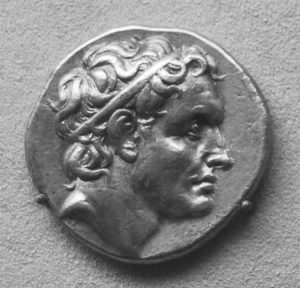 Among the successors of Alexander the Great, a special place is occupied by the Thracian Eumenes of Cardia. Many historians consider him the most capable of all and they are probably right. Plutarch is known, basically, from his magnificent work “Parallel Lives”. One of the books of this work is dedicated to the Roman general Quintus Sertorius (123-72 BC), who remained in history from his dispute with Sulla and his action in the Iberian Peninsula and to Eumenes, a sign of the great esteem that the Boeotian historian had for him, but also of how important the Thracian soldier and diplomat was.
Eumenes was born in 362 BC in Cardia, Thrace. Cardia was the largest of the cities of the Thracian Peninsula on the Black Gulf, also known as the Gulf of Xiros or the Gulf of Saros, which is located about 30 nautical miles southeast of Alexandroupolis, north of the Gallipoli Peninsula. Cardia was a colony of Milesians and Clazomenians. Eumenes came from a prominent Greek Thracian family. It seems that his father, Hieronymus, was a friend of Philip II, father of Alexander.
In 344 BC, when Eumenes was only 18 years old, Philip, appreciating his intellectual qualities, summoned him to Macedonia and made him his secretary. Eumenes proved to be so capable and effective that when Philip II died (assassinated, to be exact) in 336 BC, Alexander the Great, who ascended to the throne, retained him in his position and surrounded him with his trust. Eumenes honored this trust, even after the great general’s death.
Eumenes in Alexander’s campaign
Eumenes followed Alexander on his campaign, as adjutant, chief secretary and responsible for compiling the “Royal Journals” (i.e. the war calendar), which included not only military and political information, but also information related to the customs, traditions, religion and arts of the peoples they encountered. For their compilation, Eumenes had created a large group of special collaborators with his main assistant Diodotus from Erythrae in Ionia. Recognizing his abilities, Alexander the Great placed him in the class of “partners”, named him trierarch (326 BC) and, at the marriages of the Macedonians with noble Persians in Susa (324 BC), gave him as his wife Artone, daughter of Artabazus and relative of Darius III.
The Macedonian officials, however, did not look upon Eumenes with favor. They despised him as a foreigner (“Thracian”) and at the same time considered him more of a scholar than a soldier, while they envied him for the positions he had occupied.
After the death of Alexander the Great
After the death of Alexander the Great (323 BC), Eumenes, using his political and diplomatic skills, reconciled the warring factions of Perdiccas and Meleager and when the provinces of the state were distributed, he took Cappadocia. However, it had not been conquered, so Eumenes together with Perdiccas marched against the king of Ariarathes I and defeated him, occupying Cappadocia (322 BC).
Although he accepted tempting offers from Craterus and Antipater, in the War of the Diadochi Eumenes supported the “legitimate successor” of Alexander the Great Perdiccas. He offered to mediate to reconcile Perdiccas with Craterus, whom he honored as his old and experienced comrade-in-arms. But Craterus not only did not respond, but moved against him.
Craterus, however, was particularly beloved by the Macedonian soldiers. Plutarch writes about this: “For the Macedonians loved him very much (meaning Craterus) and if they saw his helmet and heard his voice, they would run with their weapons towards him. Moreover, the name of Craterus was truly great and the soldiers sought him even after the death of Alexander for their sake, by defending them when he was carried away by zeal for the Persians and how he defended the native morals that were degraded by tenderness and luxury”.
Thus, Eumenes spread the news to his soldiers that Neoptolemus and Pigris were arriving with cavalry from Cappadocia and Paphlagonia. In the battle that followed, he did not send Macedonians to fight Perdiccas, but two “foreign” cavalry battalions, led by Pharnabazus, son of Artabazus, and Phoenicus the Tenedian. Eumenes himself moved against Neoptolemus, whom he killed. In this battle, which took place somewhere in Phrygia or Cappadocia, Craterus was wounded by a Thracian who attacked him from the flank and died shortly afterwards. Eumenes ran to him, supported him in his last moments and made sure that he was buried with honors, thus satisfying the feelings of his Macedonian soldiers.
But when a few days later (end of May 321 BC), Perdiccas was assassinated during a mutiny in Egypt (“according to the state of affairs in Egypt,” writes Plutarch), the Macedonian successors, filled with rage, “directly” decided on the death of Eumenes. Antigonus and Antipater were elected generals in the war against him. Eumenes was accused of being responsible for the murder of Perdiccas and was condemned along with 50 of his associates, at the famous council held in Triparadisus.
Meanwhile, Eumenes assembled a strong cavalry in Troad and went to Lydia, wanting to prevent Antipater’s return to Macedonia, but he eventually withdrew to Celainae in Phrygia, as his attempt to ally Alexander’s sister Cleopatra with Sardis failed.
In the spring of 320 BC, Antigonus moved against Eumenes, who, convincing one of his officers, Apollonides, to abandon him with his cavalry on the battlefield, managed to crush him on the Orcynian Plains. In vain, Eumenes sought allies in Armenia. His soldiers abandoned him and with 600 men, he fled to the northern heights of Taurus and fortified himself at Nora.
Antigonus besieged him with strong forces. However, because the siege lasted a long time, he tried to ally himself with Eumenes. He demanded that his satrapy be returned to him, that he be freed from any accusations and that the oath he would take would not bring him into conflict with the legitimate successors of Alexander the Great (Alexander IV and Philip III Aridaeus). Antigonus referred the matter to Antipater and left, but leaving forces to continue the siege. Finally, the able diplomat Eumenes succeeded in convincing his besiegers, who were Macedonian soldiers after all, to release him (319 BC).
Then, invoking the name of the legitimate successors of Alexander the Great, he tried to gather an army.
He had excellent relations with the royal house of Macedonia, of which he was a support. In fact, he corresponded with Olympias, Alexander’s mother.
Eumenes general-emperor of Asia
After the death of Antipater (318 BC), Polyperchon became the “curator” of the state. Eumenes collaborated with him, was restored to his satrapy and received the title of “general emperor” of all Asia. He undertook to fight Antigonus and fight for the unity of the state. In 318 BC he went to Cnidus where he met the famous “silver-swords”. These were 300 veteran bodyguards of Alexander who guarded the royal treasury.
Eumenes proposed to them to create a council in the name of Alexander the Great. Gaining their trust, he succeeded in having them give him money from the royal treasury and thus created a worthy army of mercenaries: 10,000 infantry and 2,000 cavalry.
The gunpowder-smoked “silver spears” also joined him, who despite their age (they were then between 60 and 70 years old), were considered unbeatable warriors. Antigonus tried to recruit Eumenes’ officers to his side without success. After all, the Thracian general had allies Olympias and Polyperchon.
In the summer of 317 BC, Eumenes defeated the army of Antigonus near the river Copratus and when his opponent went to Media, Eumenes headed for Persia where he was unable to gain the allies of the defeated. However, he succeeded in limiting the ambitions of the general. Peucestas, who wanted to take his position, imposed discipline on the army and, borrowing large sums from the satraps in the name of the kings, formed a worthy army. In the autumn of 317 BC, Eumenes defeated Antigonus, who had suffered heavy losses, at Paraitakine.
The end of Eumenes
A few months later, Antigonus tried, without success, to surprise Eumenes at Gabeni. However, in the battle that followed, Eumenes faced two unexpected events. “Peucestas fought sluggishly and without valor,” as Plutarch writes (later he joined Antigonus with 10,000 men and, in the confusion of the battle, Antigonus’ men managed to capture Eumenes’ camp where the families of the “silverbacks” and their property were located. They, in order to get them back, agreed to hand Eumenes over to Antigonus. Besides, their leaders Antigenes and Teutamus, in a meeting with satraps and generals, decided to kill Eumenes, after first using him in battle.
Finally, Eumenes fell into the hands of Antigonus, who gave orders to guard him “like an elephant or a lion”. Antigonus, due to their old friendship, did not want to see him. Later, he gave orders to loosen his bonds and to allow any friend who wished to see him to visit him. Nearchus, the famous admiral from Crete, and Antigonus’ son, Demetrius the Besieger, begged him to spare Eumenes’ life. After many days of thought, Antigonus decided that Eumenes must die.
He gave orders to leave him hungry, but 2-3 days later he ordered him to be killed. He handed his body over to his friends, allowed them to burn it, transport his remains gathered in a silver urn and give them to his wife and children. As for the “silver-swords”, considering them impious and brutal, Antigonus handed them over to the commander of Arachosia, Sibyrtius, ordering him to destroy and eliminate them by all means, so that none of them would return to Macedonia and see the Greek sea.
With the death of Eumenes, in 316 BC, the effort to unify the state of Alexander the Great was definitively wrecked. Unfortunately, this great diplomat and general never managed to have loyal associates by his side. And his torturous and humiliating death was not worthy of the man who succeeded Perdiccas and Hephaestion in office and who, if he had not died at the age of 46, the fate of Alexander the Great’s empire would probably have been different.