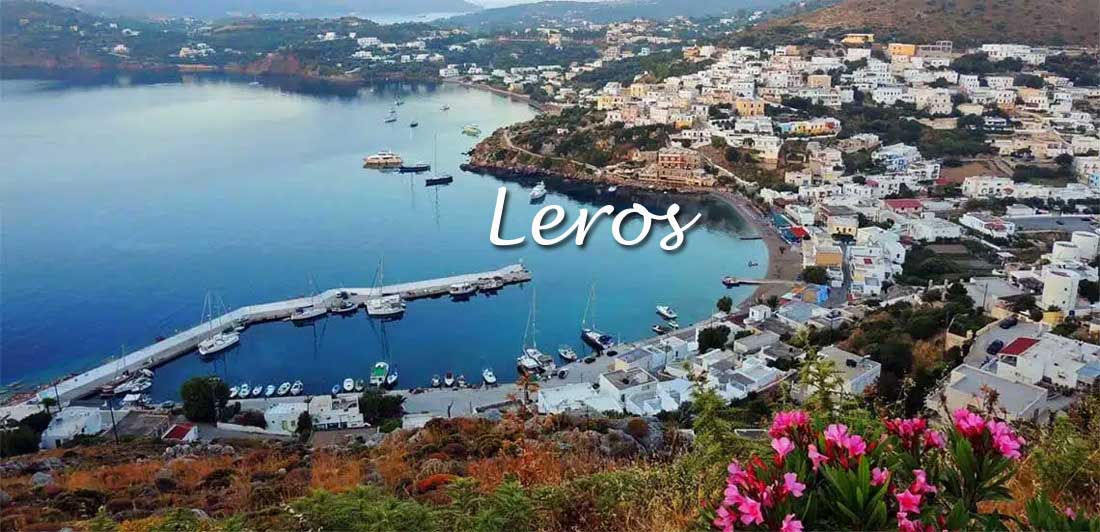
A brief history of Leros
The history of Leros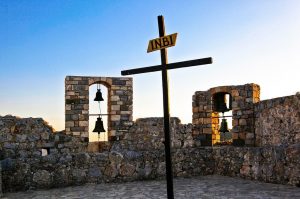 shows archaeologically documented human presence and activity since prehistoric times, with findings from the late Neolithic and the early Bronze Age.
Leros was inhabited in prehistoric times by the Karians a tribe of Asia Minor and also on a small scale by the Phoenicians and the Minoans. Leros took part in the Trojan War and was – after the conquest by the Dorians around the year 1000 BC – definitively part of the Greek world.
Due to its proximity to the major cities Ephesus and Miletus on the mainland of Asia Minor, Leros fell under Ionian influence. This influence was expressed, among other things, with the cult of Artemis on the island. The Lerian Artemis was a variant of the Artemis of Ephesus. Remains of what may have been the most important shrine of Artemis can be found in the north of the island at Partheni.
In historical times, the development and character formed by Leros were significantly influenced by its close relationship with Miletos, whose inhabitants settled the island. From the sphere of linguistic influence, Leros passed to successive Spartan and Roman rule, while the Macedonian presence on the island has also been archaeologically confirmed.
The official cult had its center in Partheni, in the northern part of the island, and referred to the Virgin Iokallida, who is identified with Artemis and connects the island with the myth of the Meleagrids. The architectural remains of antiquity include remains of two important fortifications in Partheni and Xirokambos, as well as the residential center of the island in Agia Marina.
Leros in Classic Greece
Despite the Doric character of the island, Leros became a member of the Delean Federation and thus aided Athens.
After the classical era, Leros followed the flow of events and subsequently came under Macedonian, Roman and Byzantine rule. In 1309 Leros was simultaneously occupied by several islands by the Knights of St John who fortified the Castle of Leros.
In 1522 the knights were defeated by the Ottoman Turks and it was given considerable autonomy in trade and economy. From that point on, Leros was officially part of the Ottoman Empire. However, the island enjoyed a large degree of autonomy and had no Turkish settlements.
Relative freedom provided some form of prosperity based on trade and agriculture abroad. After the disappearance of the threat of piracy in the early 19th century, the commercial economy of Leros flourished. Shipowners and captains built mansions throughout the villages as a sign of their greater prosperity.
Leros in Byzantine times
 The transition to Christian times finds Leros administratively under the Province of the Islands (Provincia Insularum), under the administration of Asia. The spread of Christianity in the Dodecanese did not spare Leros, with some delay however, as the long-standing cult of Artemis was still strong. With the prevalence of the new religion, the island was organized episcopally.
The Diocese of Leros, subordinate to the Metropolis of Rhodes, was confirmed established before 553, when the 5th Ecumenical Council of Constantinople, convened by Justinian for the condemnation of heretical writings, was also attended by the Bishop of Leros, John I.
The early Christian period
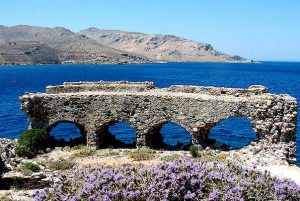
The early Christian period on the island was characterized by intense building activity. Factors, such as the prevalence of Christianity and the organization of the settlement, allowed the construction of numerous basilicas and the establishment of many new settlements in Agia Marina, Partheni, Alinda and Lakki.
The archaeological material of the period is not limited to the rich architectural remains that testify to the extensive reconstruction of the island, but includes movable finds (coins, pottery), numerous fragments of mosaic floors and dedicatory inscriptions, as well as scattered architectural members.
Pirate raids and invation of the Arabs
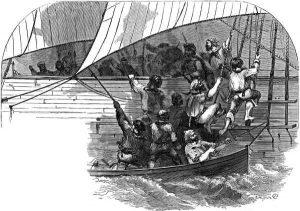 The prosperity experienced by the islands in the first Christian centuries was violently stopped with the invasion and advance of the Arabs in the Aegean area. The years that followed until the 10th century were identified with an era of recession and stagnation.
Sea lanes became unsafe, commercial activity was halted, and widespread destruction occurred in settlements and major commercial centers. In Leros, this period of turmoil was recorded with the abandonment of settlements and the movement of populations to the interior of the island.
The castle of Panteli, the most important medieval monument of Leros, and the castle of Lepida trace their construction phases back to this period.
Re-establishment of the Byzantines in Leros
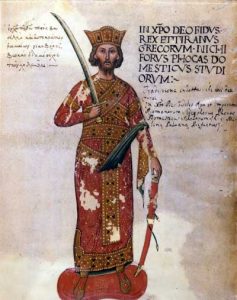 The recapture of Crete in 961 by Nikephoros Phokas marked the end of this dark era and ushered in a period of re-establishment of Byzantine power in the Aegean, in the context of which large monasteries were erected on the islands and communication with the major centers of the empire was restored. Imperial documents of the 11th century testify to developments that took place in Leros.
Indicative is the chrysobull of Alexios I Comnenus, with which in 1087 Christodoulos Latinos, founder of the Monastery of Saint John the Theologian in Patmos, was granted the island of Leipsos, the suburbs of Parthenio and Temenia and part of the castle of Pantelio on Leros. Later, in 1088, by order of Anna of Dalassini, the castle was granted to Christodoulos in its entirety.
The knigts of St John and the Ottoman occupation
In 1309 the island of Leros was captured by the knights of St John and joined together with its neighboring islands of Kalymnos and Nisyros in the district of Kos.
From the end of the 15th to the beginning of the 16th century, the knights repaired the walls and built the outer enclosure of the Panteli castle, in order to modernize the defense of the island in accordance with the establishment of the use of firearms. Systematic pirate raids and looting in the second half of the 15th century resulted in the surrender of Leros in 1522 to the Ottomans.
Participation of Leros in the Greek revoloution
The participation of Leros in the liberation struggle of Greece of 1821 is little known. However, by examining the survived archival material, one can ascertain important actions of the Greek authorities and the inhabitants of the island at the time.
“The people of Leros, from May 1821, stood by the side of the other islanders, who bore the heavy weight of the struggle at sea, in various ways” Theodoros Moschonas, Memorator and Librarian of the Patriarchate of Alexandria, in his book “Leros and the Lerians”, notes.
In 1821 the flag of the Revolution was raised in the Dodecanese, first in Patmon and later in Leron. Fearless people of Leros, as Turkomanolos, Krasouzis and the two brothers Hatzimnoli, took up arms. The Hatzimanolis brothers were seriously wounded in Crete and died in Nafplion
Throughout the struggle, Leros was an important supply base for the Greek fleet, but also received frequent visits from Austrian and Turkish warships, which demonstrates the strategic importance of its ports.
Italian conquest
The wealth of Leros ended abruptly in 1911 after the conquest of the island and the remaining islands of the Dodecanese by the Italians during the Turkish-Italian War.
The Italians adopted a policy of deliberate Italianization and facilitated the settlement of many Italian families. However, the island became particularly important as a naval base for the Italian fleet. Lakki Bay, one of the largest and deepest natural harbors in the Mediterranean, combined with its strategic position on the route to the Dardanelles, made the island ideal for this new task.
In the bay of Lakki the Italians built a new city, Portolago (Today’s Lakki), in a very characteristic modernist style. A cinema, hotel, market and houses for navy personnel were built. The Italian buildings have recently been restored. The fact serves to illustrate the importance that the Italians attributed to Leros was that Mussolini him self built a summer residence on the island, which he has never visited.
Modern History
In September 1943, at a time when the Second World War was raging uncontrollably, the most critical battle of the Dodecanese campaign was fought on the island of Leros, with which the British attempted, without success, to occupy the islands after the capitulation of Italy .
From September 8 to November 16, 1943, hundreds of British, Italian and German soldiers died at Leros and thousands more became prisoners of war.
Leros was officially incorporated into Greece in 1948. The recent history of the island was marked by the operation of the State Asylum (Psychiatric Hospital) and concentration camps for political prisoners during the dictatorship.