
Information about Amorgos island
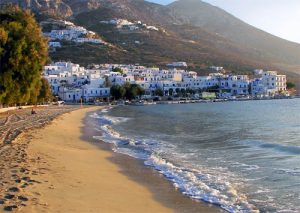 Amorgos is situated in the Aegean Sea, southeast of Naxos. It has a long shape and spans across 121 square kilometres, home to approximately 1800 people. The locals are involved in fishing, boatbuilding, making sponges, agriculture, animal farming and tourism.
Amorgos offers a special natural beauty, simple architecture of its settlements and hospitable inhabitants. Additionally, it boasts an abundance of cultural heritage. Despite the advances of modernity, this island continues to enthrall and surprise travellers with its unique charm.
Visitors to Amorgos become enchanted by its unique aura, and advertise the place with word of mouth to those seeking authenticity. Those who visit take away special memories and the anticipation of returning in the future.
The capital of Amorgos, Chora, is situated away from the coastline for safety from pirates. Its cobbled streets, white houses with blue windows, and two-story mansions along with the windmills located on the hills all create a stunningly tranquil picture that will leave an impression on any who travel its paths.
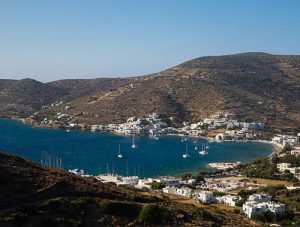 The picturesque port of Chora, on the western coast of the island, is Katapola – a natural haven in the Cyclades. Overlooking the serene bay that displays a plethora of azure tones is the traditional settlement of Katapola, Xilokeratidi and Rachidi.
Boasting iconic architectural designs and sprawling olive groves across its flat terrain, this port is sure to captivate visitors with its charm. Additionally, Katapola offers travellers plenty of amenities to ensure an enjoyable stay.
The northern region of Amorgos is home to ancient Aegiali, as well as its picturesque settlements; Ormos – the second port and tourist hotspot – as well as Potamos, perched in a panoramic position above the port, Lagada with its amphitheatrical arrangement overlooking the plain and Tholaria boasting paved alleys and amazing arches.
From Chora, the road south takes you to Kato Meria and its many traditional rural settlements, including Kamari, Vroutsi, Arkesini, Kolofana and Kalotaritissa. Various beaches await you here; Mouros, Ammoudi, Kato Kampos, Paradeisia and also the natural fishing refuge – the bay of Kalotaritissa.
Amorgos boasts a unique geography which makes it an ideal location for mountain excursions. Until the late eighties, these routes were the principal method of traversing the island. Currently, six major trails have been properly catalogued and marked in an effort to showcase the island’s most stunning sites to visitors.
Amorgos is renowned not only in the Cyclades, but across Greece and beyond, for its medicinal flora. The mountainous inclines are flourishing with vivid wildflowers as well as plants that have been treasured since antiquity for their curative properties. Exploring the pathways of Amorgos provides a unique chance to discover this natural abundance.
If you decide to visit Amorgos, don’t miss the chance to experience its unique traditional atmosphere. You will be rewarded by colorful celebrations featuring vibrant folk customs, music and dance – not to mention the delicious Amorgos cuisine.
History
 The origins of human settlement on Amorgos can be traced back to the prehistoric era, as evidenced by the archaeological remains discovered on the island. The Minoans, one of the earliest advanced civilizations in Europe, established a presence on Amorgos around 3000 BCE. The Minoans left their mark in the form of artifacts and pottery fragments, providing a glimpse into their sophisticated culture.
During the classical period, Amorgos became part of the Athenian Alliance and experienced significant cultural and economic growth. The island was known for its vineyards, which produced a renowned wine called “Thracian,” highly sought after in ancient Greece. It was also during this time that Amorgos played a significant role in the development of the Aegean trade routes, connecting the island with other important centers of commerce.
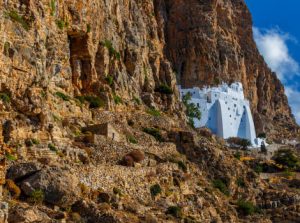
Amorgos flourished under the Byzantine Empire, which left a lasting impact on the island’s architecture and cultural heritage. The Byzantines constructed numerous monasteries on Amorgos, including the famous Panagia Hozoviotissa. Perched on a cliffside, this breathtaking monastery dates back to the 11th century and is still inhabited by monks today. Its stunning location and Byzantine frescoes make it a must-visit attraction for those exploring Amorgos.
In the following centuries, Amorgos faced a series of invasions and occupations by various powers, including the Venetians and the Ottomans. These occupations left their mark on the island, with remnants of fortifications and other architectural elements scattered across Amorgos. The Ottoman rule, which lasted until the early 20th century, shaped the island’s cultural fusion, blending Greek and Turkish influences.
Mythology
One of the most significant mythological tales connected to Amorgos is related to the island’s name itself. According to ancient Greek mythology, Amorgos was named after a nymph called Amorgos. The story goes that Amorgos was the daughter of King Minos of Crete and Queen Pasiphae. After Minos’ death, Amorgos inherited the island and became its ruler. She was said to be a fair and just queen, loved and respected by her people.
Another myth associated with Amorgos involves the famous hero Theseus. Theseus was known for his adventures and feats, and one of his journeys led him to the island of Amorgos. It is said that on his way back from Crete, after slaying the Minotaur, Theseus stopped at Amorgos to pay his respects to the goddess Artemis. There was a sanctuary dedicated to Artemis on the island, and Theseus offered sacrifices and performed rituals there.
Additionally, Amorgos is mentioned by Homer. In Odyssey, the island is referred to as a stopping point for the protagonist Odysseus during his long journey back home to Ithaca. Odysseus and his crew were said to have landed on Amorgos and encountered the sorceress Circe, who lived there. Circe is known for her ability to transform men into animals, and she posed a great danger to Odysseus and his companions.
Geography
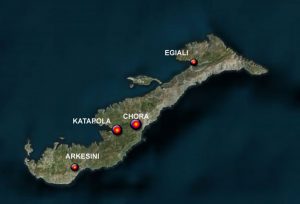 Amorgos is situated approximately 136 kilometers (85 miles) southeast of Athens, the capital of Greece. It lies close to the neighboring islands of Naxos and Astypalaia.
The island covers an area of around 121 square kilometers (47 square miles). Amorgos has a long and narrow shape, stretching about 33 kilometers (20 miles) in length from its northern to southern tip. The width varies, but it typically ranges from 1.5 to 6 kilometers (0.9 to 3.7 miles).
The island is characterized by its rugged and mountainous terrain. The island’s highest peak is Mount Krikellos, standing at an elevation of 821 meters (2,694 feet) above sea level. Steep cliffs and rocky landscapes are prevalent along its coastline, offering stunning views of the sea.
Despite its rocky nature, Amorgos is home to several beautiful beaches, especially on its southern and southeastern coasts.
Flora and Fauna
Flora
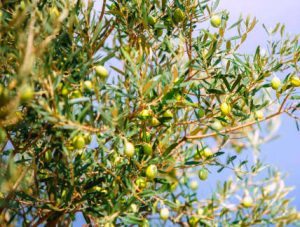 Olive trees are an essential part of the island’s agricultural heritage. During spring and early summer, the hills of Amorgos are transformed with a vibrant mix of wildflowers. Poppies, daisies, lavender and thyme speckle the landscape, adding an air of beauty to the scenery.
Tamarisk Trees are a common sight near the coastal regions of Amorgos. These trees have delicate feathery flowers, in either pink or white, and are well-suited to thrive in the salt-laden atmosphere.
The diverse aroma of Amorgos is provided by a variety of herbs, including oregano, thyme, rosemary, and sage. These plants are plentiful on the island and are frequently used in regional cooking.
Fauna
The waters around Amorgos are filled with life. Underwater explorers delight in seeing groupers, breams, wrasses, and potentially dolphins and sea turtles.
Amorgos is a birdwatcher’s paradise, with the Eleonora’s Falcon, European shags, yellow-legged gulls, Eurasian scops owls and plenty of migratory birds all visible in the region. One can observe the abundant presence of butterflies on Amorgos, such as Swallowtail, Painted Lady, Red Admiral and Clouded Yellow.
Economy of Amorgos
Amorgos relies predominantly on agriculture, animal husbandry and fishing, with the development of tourism in recent years. Its unique flora, diverse varieties of shrubs and aromatic herbs, together with wild flowers, produce high-grade honey enjoyed around Greece.
Furthermore, women from the island create admirable handmade Amorgian cottons and embroideries with exceptional precision and dexterity.
Amorgos tourism
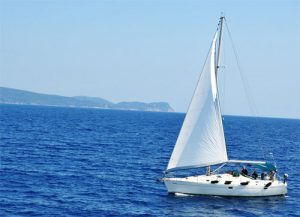 Like many Greek islands, Amorgos has experienced a growth in tourism over the years. It has attracted visitors seeking an authentic Greek island experience, away from more commercialized and crowded destinations.
The island’s serene atmosphere, charming architecture, and stunning landscapes have contributed to its popularity among tourists.
Despite the increasing number of visitors, Amorgos has strived to maintain its traditional character and preserve its natural and cultural heritage. The local authorities have implemented measures to ensure sustainable tourism development, promoting responsible tourism practices and protecting the island’s fragile ecosystems.
Accommodation and Infrastructure
In recent years, Amorgos has seen improvements in its accommodation and infrastructure to cater to the growing number of tourists. The island offers a range of options, including hotels, guesthouses, and traditional homes for rent. However, compared to some more developed tourist destinations, the infrastructure remains relatively simple and in line with the island’s low-key ambiance.
Cultural and Natural Attractions
Amorgos boasts several cultural and natural attractions that draw tourists to the island. The Monastery of Panagia Hozoviotissa, perched on a cliffside overlooking the Aegean Sea, is one of the most iconic landmarks. The Chora, the island’s main town, is a charming village with narrow alleys, whitewashed houses, and stunning views. The island’s beaches, such as Agia Anna and Mouros, offer crystal-clear waters and a peaceful atmosphere.
Outdoor Activities
Amorgos appeals to nature lovers and outdoor enthusiasts due to its rugged landscapes and hiking trails. The island offers opportunities for hiking, exploring ancient paths, and enjoying breathtaking views. Diving is also popular around Amorgos, as it is home to fascinating underwater caves and rich marine life.
With its natural beauty and diverse landscapes, Amorgos offers a wide array of outdoor activities that cater to all interests and levels of adventure. Whether you prefer exploring the land, sea, or sky, this enchanting island has something for everyone.
Local cuisine
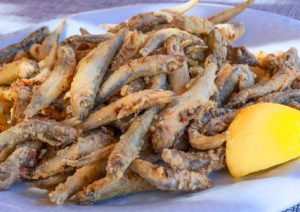 The island offers a wide variety of delicious dishes, incorporating fresh local products, seafood, and traditional flavors that reflect the Mediterranean culinary heritage. Exploring the local taverns and restaurants on the island will provide you with a delightful gastronomic experience. The local cuisine of Amorgos is characterized by its simplicity, use of fresh ingredients, and strong Mediterranean flavors.
Being an island, seafood plays a significant role in Amorgian cuisine. Fresh fish and seafood are abundant and commonly used in various dishes. You can find a variety of fish such as red mullet, sea bream, sardines, and octopus prepared in different ways, including grilling, baking, or frying.
Amorgos produces excellent cheeses, including the famous “Katiki” cheese. Katiki is a soft, creamy cheese made from goat or sheep milk. It has a mild and slightly tangy flavor, making it a perfect accompaniment to salads, bread, or enjoyed on its own.
Weather in Amorgos
During the summer, Amorgos typically experiences warm and sunny weather. Summer temperatures in Amorgos can range from around 25 to 35 degrees Celsius, with occasional heatwaves pushing the mercury even higher.
The summer months tend to be relatively dry. While there may be occasional showers or isolated thunderstorms, rainfall is generally minimal during this time of year.
The island can experience occasional breezes during the summer months, providing some relief from the heat. However, it’s worth noting that the wind strength can vary, and certain areas on the island might be windier than others.
The sea around Amorgos warms up significantly during the summer, with temperatures ranging from approximately 22 to 26 degrees Celsius. It’s a fantastic time for swimming and water activities.
It’s important to keep in mind that weather conditions can vary from year to year, and it’s always a good idea to check the local weather forecast for the most accurate and up-to-date information before your trip.
Things to do
Wherever you are located, it is essential to make the time to visit the capital of the island, Hora, situated six kilometres northeast of Katapola. It is considered one of the best-preserved medieval towns in the entire Cyclades region, offering a delightful blend of windmills, whitewashed houses, and narrow, meandering alleyways originally designed to confuse the pirates who once plagued these islands.
Hora is home to several excellent tavernas that serve high-quality Greek cuisine at reasonable prices. The town is crowned by a 13th-century Venetian fortress, and you will find numerous Byzantine churches, including Greece’s smallest church, Agios Fanourios, which can only accommodate three worshippers at a time.
For those intrigued by the island’s fascinating history, there is the archaeological museum housed within an 18th-century mansion. The museum showcases intriguing artifacts excavated on the island, including remnants of the Minoan civilization that thrived here over 4,000 years ago.
By taking the path leading south from Katapola to the top of a hill, you can visit the site of the ancient city of Minoa, reputedly the summer residence of King Minos of Crete. Although little evidence remains of this once-great kingdom, you will be rewarded with breathtaking views of the island, alongside some Cyclopean walls, the remains of a gymnasium, and the foundations of a temple dedicated to Apollo.
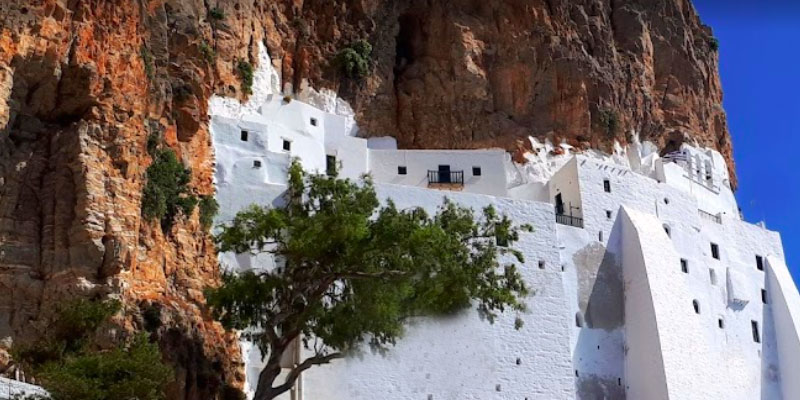
The island’s most captivating attraction is the extraordinary Hozoviotissa Monastery, perched on the sheer cliff face of the island’s east coast. Dating back to the 11th century, this monastery is one of Greece’s most awe-inspiring sights. If you make the effort to climb its 350 steps, you may even receive a guided tour from one of the monks. Visitors are occasionally offered a glass of raki and loukoumi (a Greek sweet similar to Turkish delight). It is advisable to dress modestly to avoid causing offense, and donations are welcome.
Amorgos offers several enchanting walks along its paths and mule trails that dot the island. Starting from the picturesque port of Aegiali, you can take the path leading up to the hill village of Tholaria, named after the vaulted Roman tholos tombs discovered here. On your way back, you can loop through Langada, which is one of the most beautiful villages on the island.
What to see
The landscape of Amorgos is wild and at the same time enchanting full of beautiful paths, flowers and herbs. Here you will find hospitality in a relaxing and unique atmosphere.It is an island with a particularly wild beauty that causes awe in the eyes of the visitor from the first moment he arrives on it.
Monastery of Panagia Hozoviotisa
The monastery is located east of Chora on a rock 300 meters above the sea. Tradition says that a woman in Asia during the period of iconoclasm threw the image of the Virgin into the sea so that it would not be destroyed. The icon reached Agia Anna and the islanders as soon as they found it decided to build a church there.
Shipwreck of Amorgos
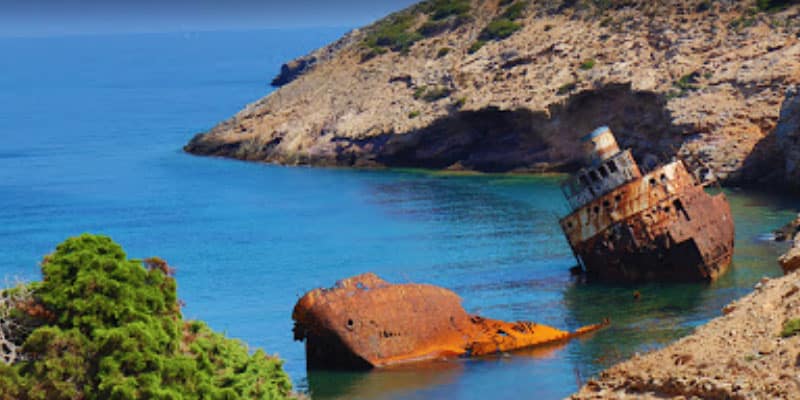
In the lower part of Amorgos, the shipwreck “Olympia” with the Cypriot flag, built in 1950, has been located for three decades. The local residents of Kolofana tell of that day filled with strong northerly winds when the ship was trying to approach someone point with less wind. However, his misjudgment of that point, in his attempt to drop anchor, resulted in him running aground on the rocks. This now rusted schooner of “Olympia”, impressed Luc Besson (creator of the movie Infinite Blue), so that he chose it as his setting, advertising it as an attraction of Kato Meria. Its old name: “Inland” can be seen in relief on its bow. The wave and atmosphere at that spot creates a strange and mysterious feeling even today.
Ancient Minoa
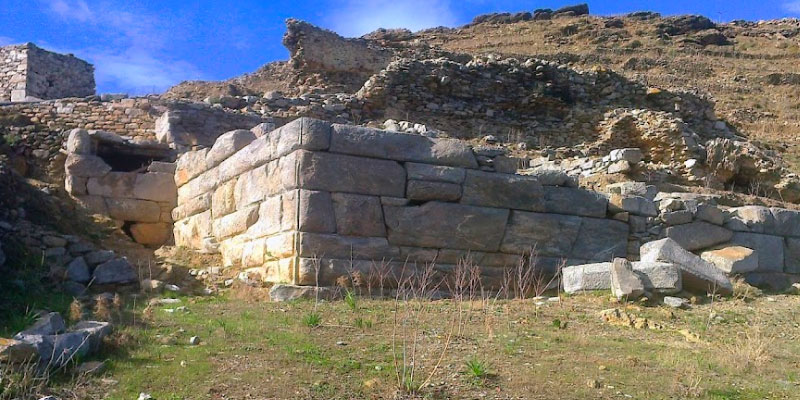
Ancient Minoa included the central part of the island with the current villages of Chora and Katapola. In Katapola, one of the best protected natural harbors of the Cyclades, at the top of the hill of Moudoulia, the ruins of the Minoan settlement, founded by Samian settlers in the 7th century BC, are preserved. The earliest habitation of the area dates back to the end of the 5th millennium BC. There is no evidence for the 2nd millennium BC, while the habitation has been continuous since the 10th century. BC until the beginning of the 4th c. AD, when the settlement is abandoned.
Agios Georgios Valsamitis
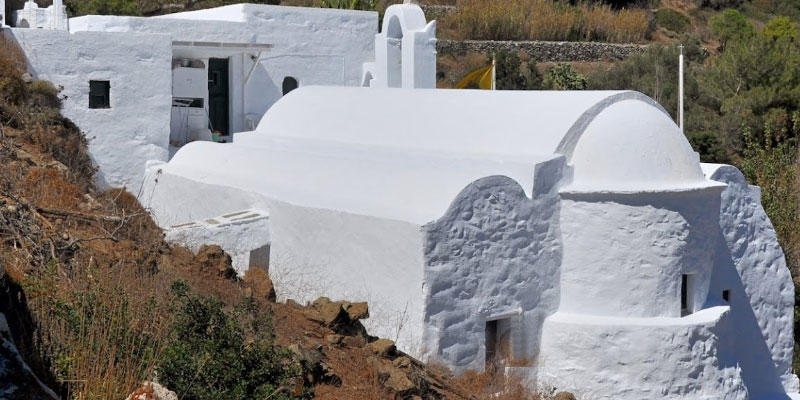
It is located just three kilometers from Chora tis Amorgos on the road to Kato Meria. According to tradition, one of the three oracles that existed in ancient Greece was located there. It was called the hydromantium of the Aegean because of the spring that gushed water which, as people believed at the time, showed the future. In the 8th century, the icon of Saint George was found in the same spot and the inhabitants built the church to honor him. Saint George the Valsamite is one of the shares of the monastery of Panagia Hozoviotissa.
Tower of Ancient Arkezini
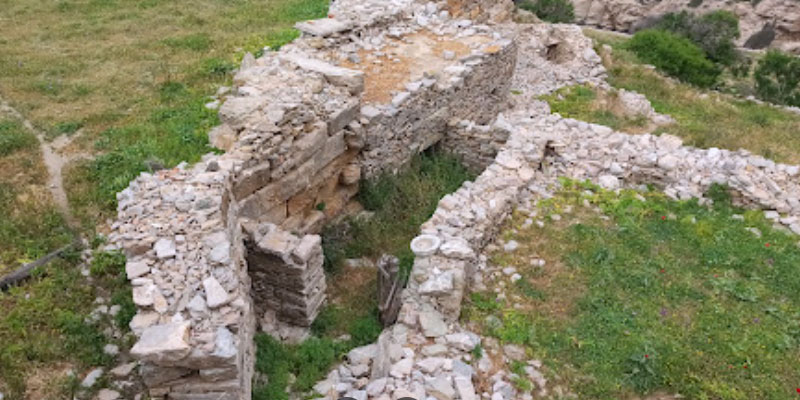
It is one of the attractions that you should not miss during your stay on the island. It is the only rectangular tower in Greece.
The tower of Gavras
It is a beautiful mansion of Venetian architecture from the 16th century that today functions as a museum in the center of Chora. It exhibits various findings, mainly sculptures and inscriptions from the excavations that have been carried out from time to time on the island.
The Archaeological Museum also is housed in the Gavras Tower, a building of Venetian architecture, dating back to the 16th century. It was inaugurated in 1963, to house findings from the three ancient cities of Amorgos (Aigiali, Arkesini and Minoa), dating from prehistoric times to the Roman era, in the 2nd century AD.
Nightlife and entertainment
Amorgos is known for its stunning natural landscapes and peaceful atmosphere. While it may not be as famous for its nightlife as some other Greek islands like Mykonos or Ios, it still offers some options for entertainment and evening activities. Here’s an overview of the nightlife scene in Amorgos:
The main town of Amorgos, Chora, has a few bars and tavernas where you can enjoy a relaxing drink or a meal in the evening. The atmosphere is generally laid-back and cozy, perfect for unwinding after a day of exploring the island.
Aegiali is another popular village on Amorgos, and it has a slightly livelier nightlife scene compared to Chora. You’ll find a few bars and cafes along the waterfront, offering drinks, music, and sometimes live performances. It’s a pleasant place to enjoy a drink while enjoying the beautiful views of the bay.
Amorgos is blessed with several picturesque beaches, and some of them have beach bars that stay open late into the night during the summer months. Agia Anna and Agios Pavlos are two beaches known for their beach bars, where you can sip cocktails, enjoy music, and soak up the beachside ambiance.
hroughout the summer, Amorgos hosts various festivals and cultural events that often include live music, dancing, and traditional celebrations. These events provide a unique opportunity to experience local culture and enjoy some nighttime entertainment.
It’s important to note that Amorgos is generally a peaceful and tranquil island, so if you’re looking for a vibrant and wild nightlife scene, you may want to consider visiting other Greek islands. However, if you appreciate a more relaxed and low-key atmosphere, Amorgos can offer you a delightful evening experience.
Main villages of Amorgos
Chora
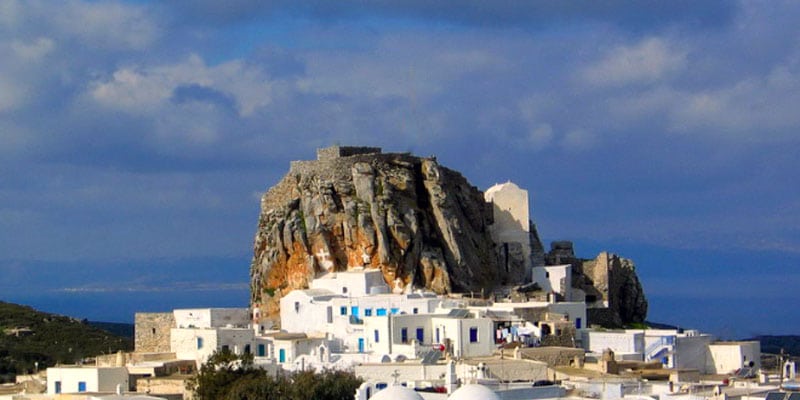
Chora is the capital and main village of Amorgos. It is situated on a hilltop and features charming Cycladic architecture with narrow alleys, whitewashed houses, and blue-domed churches. The village offers panoramic views of the island and the surrounding sea. Chora is also home to the impressive 13th-century Venetian castle, which is worth a visit.
Katapola
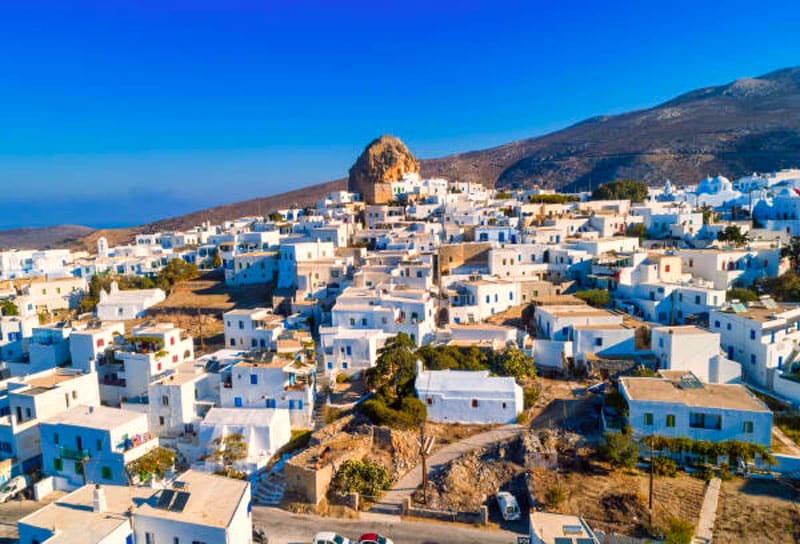
Located on the eastern coast of Amorgos, Katapola is a picturesque village and one of the main ports of the island. It has a relaxed and traditional atmosphere, with waterfront tavernas, cafés, and shops. The village is surrounded by beautiful beaches and is an ideal base for exploring the island.
Aegiali
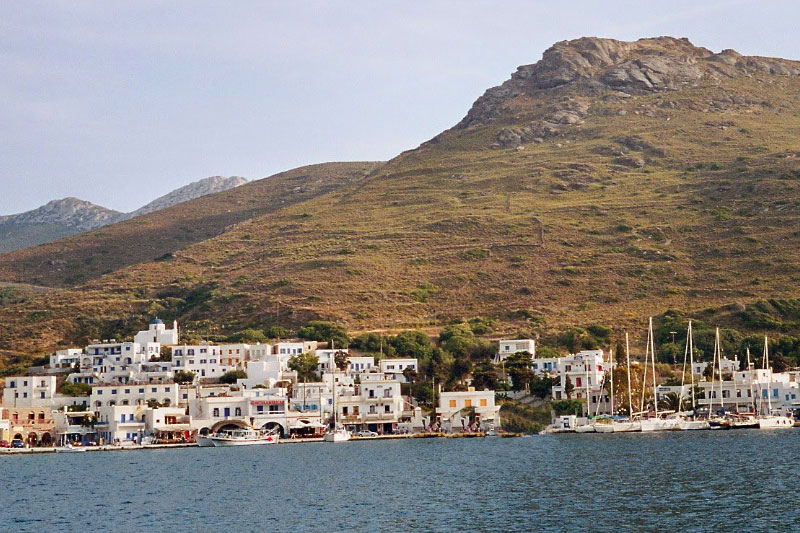
Situated on the northern part of Amorgos, Aegiali is another popular village and port. It is known for its scenic beauty, with a long sandy beach and crystal-clear waters. Aegiali offers a range of accommodations, restaurants, and bars, making it a vibrant spot on the island.
Tholaria
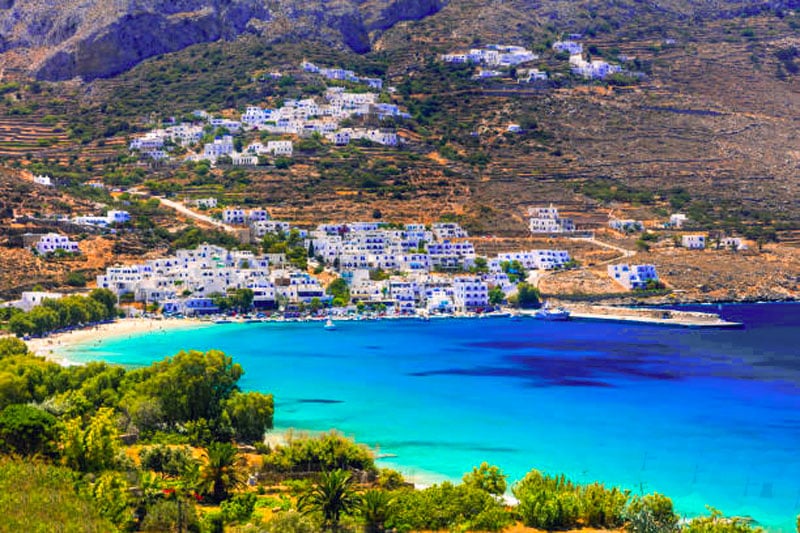
Located just above Aegiali, Tholaria is a charming mountain village known for its traditional character. It features narrow stone-paved streets, whitewashed houses, and beautiful courtyards. Tholaria offers stunning views of the Aegean Sea and is renowned for its local cuisine.
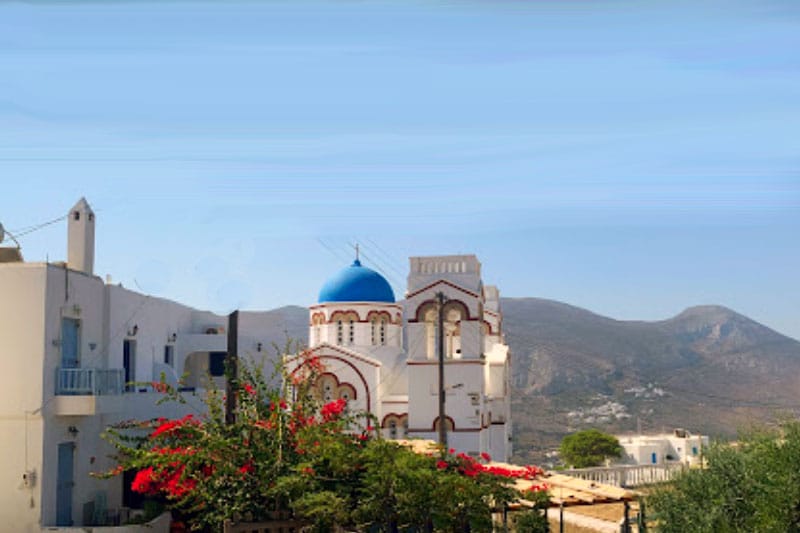
Langada
Situated on the northeastern side of Amorgos, Langada is a small village nestled in the mountains. It is known for its traditional architecture, peaceful atmosphere, and scenic surroundings. Langada offers a glimpse into the authentic rural life of Amorgos.
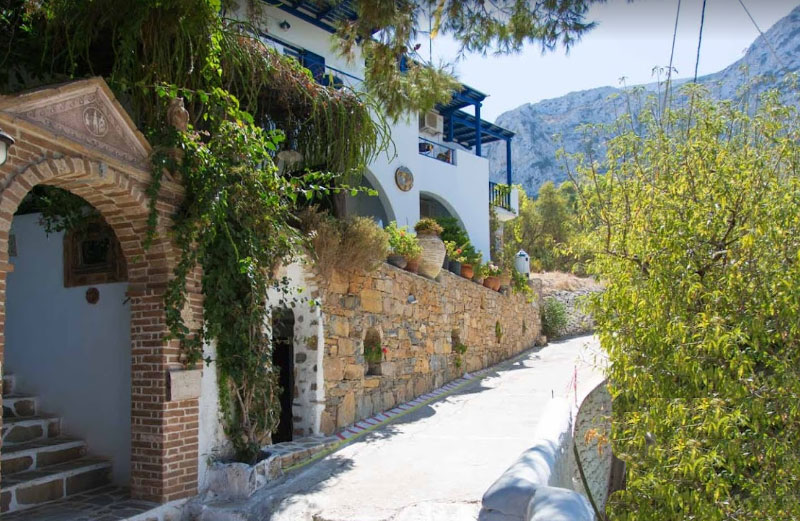
Potamos
Located in the heart of Amorgos, Potamos is a traditional village surrounded by terraced fields and vineyards. It is characterized by its stone houses, small chapels, and agricultural landscape. Potamos is an ideal place for those seeking tranquility and a taste of the island’s rural lifestyle
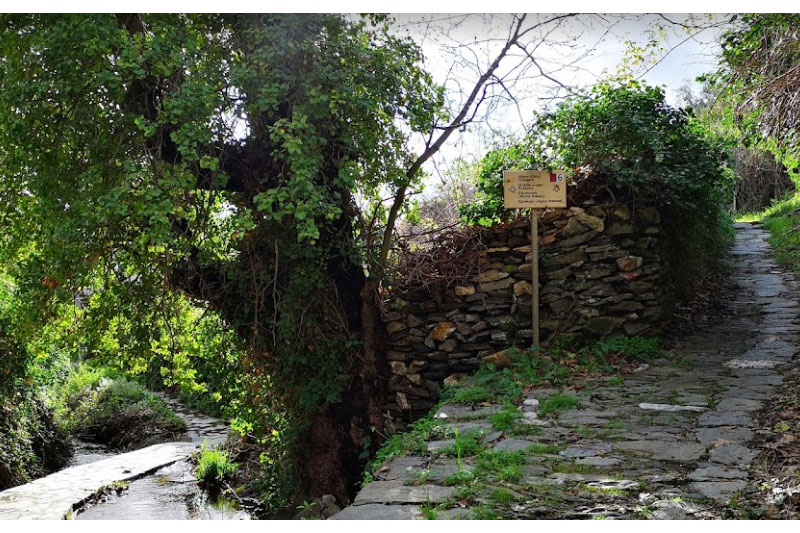
Moving around in Amorgos
While Amorgos it is not a large island, it’s still helpful to know how to get around using various modes of transportation. From May to October, regular bus services link Chora with Amorgos’ ports, villages and beaches.It’s worth noting that public transportation options may be more limited during the low season or on Sundays and holidays, so it’s a good idea to plan accordingly. Also, if you’re visiting during the peak tourist season, it’s advisable to check the schedules in advance and allow for some extra time in case of delays.
By Bus
The island of Amorgos has a reliable bus network that connects its main towns and villages. The buses are the most cost-effective way to travel around the island. The main bus station is located in Chora, the capital of Amorgos, and from there, you can catch buses to other destinations. Bus schedules may vary depending on the season, so it’s a good idea to check the current timetable.
By Taxi
Taxis are available on Amorgos, and you can find taxi stands in major towns and near popular tourist areas. However, since the island is not heavily populated, it’s recommended to book a taxi in advance, especially during peak tourist season or if you have specific time requirements. You can ask your hotel or accommodation provider to help you arrange a taxi.
Rental Cars or Scooters
Another option for exploring Amorgos is to rent a car or scooter. There are car rental agencies on the island where you can find a range of vehicles to suit your needs. Having your own wheels gives you the flexibility to explore remote areas and scenic spots at your own pace. Keep in mind that the roads in Amorgos can be narrow and winding, so exercise caution while driving.
How to get to Amorgos
There is no airport on Amorgos, therefore if you’re looking for an affordable option, taking a ferry from Athens or another nearby island is your best bet. There are numerous ferries that run daily during peak season from ports such as Piraeus and Naxos. The journey can take anywhere from 4-10 hours depending on your departure point, but it’s worth it once you arrive at the breathtaking port of Katapola.
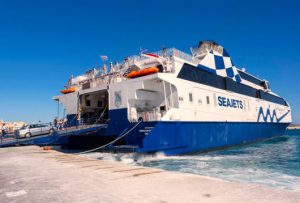 Ferries to Amorgos operate from various ports across Greece, including Athens, Naxos and Santorini. The journey time varies depending on your departure point but typically takes between 5-8 hours.
There are several ferry companies that offer services to Amorgos throughout the year. Blue Star Ferries and Seajets are two of the most popular options. Both have regular schedules with multiple departures each week.
The two ports of Amorgos, Katapola and Aegiali, are connected all year round with Piraeus, as well as with other islands of the Cyclades and the Dodecanese. Amorgos is also connected to Naxos and the rest of the Small Cyclades with the circular routes of the ferry “Express Skopelitis”
Facts about Amorgos
| Facts | Useful telephones |
|---|---|
| Site:126.346 square kilometers | Municipality of Amorgos +30 2285360200 |
| Highest mountain: Krikelos 821 meters | Amorgos Health Center +30 2285071207 |
| Coastline :112 kilometers | Regional Clinic of Aegiali +30 2285073+30 222 |
| Banks & ATM: yes | Amorgos Police Station +30 2285071210 |
| Airport : No | KTEL Buses +30 6936671033 |
| Mobile coverage :3,4,5 G | Port Authority +30 2285071259 |