
Chora the capital of Skopelos
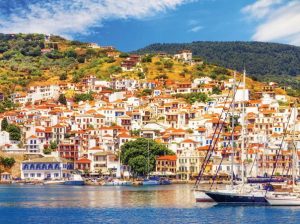 The Chora of Skopelos, is the capital and main town of the island of Skopelos. This historic and picturesque town is known for its charming narrow streets, traditional architecture, and vibrant atmosphere. Chora is situated on the northeastern coast of the island, overlooking the Aegean Sea. It is centrally located, making it a hub for various activities and a convenient base for exploring the island.
The Chora of Skopelos showcases classic Greek island architecture. The buildings are characterized by white-washed walls, blue shutters, and colorful bougainvillea flowers draping over the facades. Many houses have traditional wooden balconies, creating a picturesque and romantic setting. The town is a maze of narrow, winding streets and alleys that are perfect for leisurely strolls. These pathways are lined with small shops, boutiques, cafes, and restaurants, creating a vibrant and bustling atmosphere.
Chora boasts several noteworthy landmarks, including the Agios Athanasios Church, a beautiful white church with a blue dome that offers panoramic views of the town and the sea. Additionally, the Venetian Castle, also known as the Kastro, is a historical site worth exploring. The Folklore Museum of Skopelos, located in Chora, provides insights into the island’s culture and history.
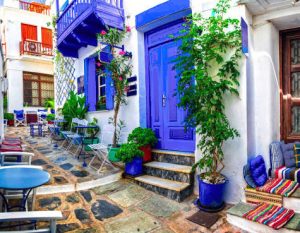 The town is home to numerous traditional Greek tavernas and restaurants serving local dishes and fresh seafood. Dining in Chora often comes with a lovely ambiance, whether it’s in a quaint courtyard or along the waterfront.
Chora offers a range of shops selling local products, including pottery, jewelry, handmade crafts, and olive oil. It’s an excellent place to pick up souvenirs and gifts.
While Skopelos is not known for its nightlife in the same way as some other Greek islands, Chora has a selection of bars and cafes where you can enjoy a drink and some live music in the evenings. The atmosphere is typically relaxed and friendly.
The town hosts various cultural events and festivals throughout the year, often featuring traditional music, dance, and celebrations that provide insight into the island’s culture and traditions.
Skopelos Chora is accessible by road from various parts of the island. The town has a well-organized bus station and is well-connected to other villages and beaches. Ferries and boats also arrive at the Skopelos port, which is a short drive from Chora.
A cliff wall brings the northern end to an abrupt halt with a row of chapels pitched precariously beneath a warren of cobblestoned streets that lead up to a 13th century Venetian Kastro.
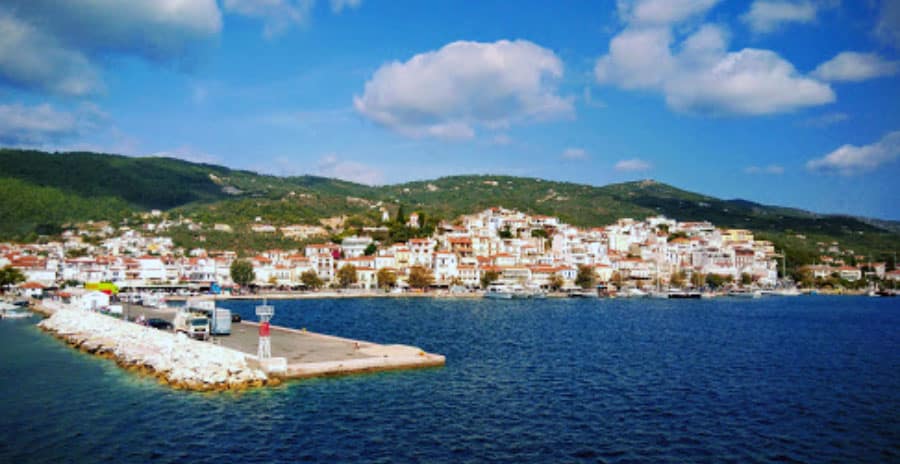
Now a designated preservation area, the streets claim more than 130 churches hidden away. A few shoddy blocks are evident but most are delightfully embellished with balconies, wrought iron trellises, brightly painted shutters and flowering plants.
Many shops are stuffed with the usual tourist tat but a higher than average shelf space is also given to locally produced crafts such as beautiful ceramics and intricate wood carvings. A small Museum of Folk Art has recently enjoyed a facelift.
To the south the sand and shingle beach looks inviting from a distance but it is little more than a litter-strewn dump with flotsam floating in from the busy harbour.