
Greece during the Stone Age
The Stone Age in Greece, encompassing the Paleolithic and Neolithic periods, represents a time of significant transformation in human society, arts, and structures.
The shift from a nomadic, hunter-gatherer lifestyle to settled, agrarian communities brought about profound changes in social organization, economic practices, and cultural expression.
The artistic achievements and architectural developments of these periods laid the foundation for the complex civilizations that would emerge in the subsequent Bronze Age and beyond.
Understanding the Stone Age in Greece provides valuable insights into the early stages of human development and the cultural evolution that has shaped the region’s history.
The legacy of these early societies is evident in the enduring artistic traditions and architectural innovations that continue to inspire and inform our understanding of ancient Greece.
Paleolithic Period (c. 2.5 million – 10,000 BCE)
Society Norms
The Paleolithic period, or Old Stone Age, in Greece is characterized by a hunter-gatherer lifestyle. Early humans in this era were nomadic, moving frequently in search of food and resources.
The society was structured around small, kin-based groups. These bands relied on hunting animals and gathering wild plants for sustenance, which necessitated a deep understanding of their natural environment.
Social organization during the Paleolithic period was relatively egalitarian, with little evidence of hierarchical structures.
Cooperation and communal sharing were vital for survival, and roles within the group were likely determined by age, gender, and skill. The archaeological record suggests that both men and women contributed significantly to the subsistence activities, though specific tasks may have been divided along gender lines.
Arts
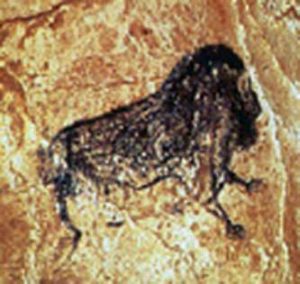 Artistic expression in the Paleolithic period is primarily evident in the form of cave paintings, carvings, and portable art objects. The earliest known art in Greece includes engraved bones and stones, which often feature geometric patterns and animal figures.
These artifacts suggest a symbolic or ritualistic significance, possibly related to hunting magic or shamanistic practices.
Cave art, such as the paintings found in the Petralona Cave in northern Greece, provides insights into the cognitive and cultural development of Paleolithic humans.
These paintings often depict animals and abstract symbols, indicating an early form of visual communication and an appreciation for aesthetic representation.
Structure
Shelter during the Paleolithic period was primarily temporary, reflecting the nomadic lifestyle of the inhabitants. Archaeological evidence points to the use of natural features such as caves and rock shelters for protection from the elements.
 These shelters were occasionally enhanced with simple structures made from wood, bone, and animal hides.
The use of fire was a significant technological advancement during this period, providing warmth, protection, and a means to cook food.
Hearths discovered in various sites, such as the Franchthi Cave in the Argolid, indicate the controlled use of fire and suggest a central place within the living area for communal activities.
Neolithic Period (c. 7,000 – 3,200 BCE)
Society Norms
The transition to the Neolithic period, or New Stone Age, marks a profound transformation in Greek society. This era is characterized by the advent of agriculture, animal domestication, and permanent settlements. The shift from a hunter-gatherer to an agrarian lifestyle brought about significant changes in social organization, economy, and daily life.
Neolithic society in Greece became more complex, with the emergence of social stratification and specialized roles. The production of surplus food allowed for population growth and the development of larger communities.
These settled communities facilitated the accumulation of resources, leading to the establishment of trade networks and the exchange of goods and ideas.
Property ownership and the division of labor became more pronounced during the Neolithic period. Agricultural practices required coordinated efforts and management, which likely led to the development of leadership roles and social hierarchies.
The construction of communal structures, such as storage facilities and ceremonial buildings, indicates a degree of social organization and cooperation.
Arts
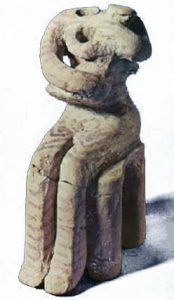 Neolithic art in Greece reflects the cultural and religious changes of the period. The production of pottery, figurines, and decorative objects became widespread, showcasing advancements in craftsmanship and artistic expression. Pottery from this era often features intricate designs and motifs, indicating a sophisticated aesthetic sense and possibly symbolic meanings.
Figurines, such as the “Lady of Saliagos” from the Cyclades, represent human and animal forms with exaggerated features. These artifacts are believed to have religious or ritualistic significance, potentially related to fertility cults or ancestor worship. The presence of such figurines in domestic and ceremonial contexts suggests their importance in Neolithic belief systems.
Architectural developments during the Neolithic period also reflect artistic and cultural advancements. The construction of megalithic structures, such as the tombs and sanctuaries found on the islands of the Aegean, indicates an increased emphasis on ceremonial and religious practices.
Structure
The Neolithic period saw the establishment of permanent settlements, with the development of complex architectural forms. Villages were typically composed of rectangular or circular houses made from mudbrick, stone, and wood. These structures often featured multiple rooms and were built close together, reflecting a sense of community and cooperation.
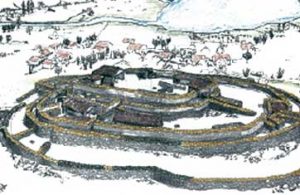 One of the most significant Neolithic sites in Greece is Sesklo, located in Thessaly. The settlement at Sesklo provides evidence of planned architecture, with houses arranged around central courtyards and communal spaces.
The use of plastered floors and walls, as well as the construction of ovens and storage pits, indicates advancements in building techniques and domestic life.
The development of defensive structures, such as walls and ditches, at some Neolithic sites suggests concerns about security and the protection of resources. This indicates increasing competition and potential conflicts between neighboring communities.